A commercial sourcing guide for christmas glass decorations, covering the brief, supplier evidence, sampling, quality control and export packing.
Source the program, not an isolated catalogue item
When sourcing Christmas glass decorations, begin with the commercial role: target customer, channel, price architecture, launch window and whether the item leads or supports a collection. This prevents the discussion from collapsing into a visual match with no plan for execution.
Typical applications include holiday tables, gift assortments, window displays, licensed seasonal programs. Rank them by importance because a product optimized for gifting may require a different weight, decoration and packing route from one intended for repeat hospitality use.
- The launch calendar is a design constraint, not only a logistics date.
- One hero shape should lead the shelf while smaller items carry accessible price points.
- Shared color references keep mixed motifs looking like one collection.
Ask for evidence that matches the category
Relevant evidence includes comparable forms, material and process experience, sample discipline, inspection controls and export packing. A broad factory presentation is less useful than proof tied to the geometry and function being sourced.
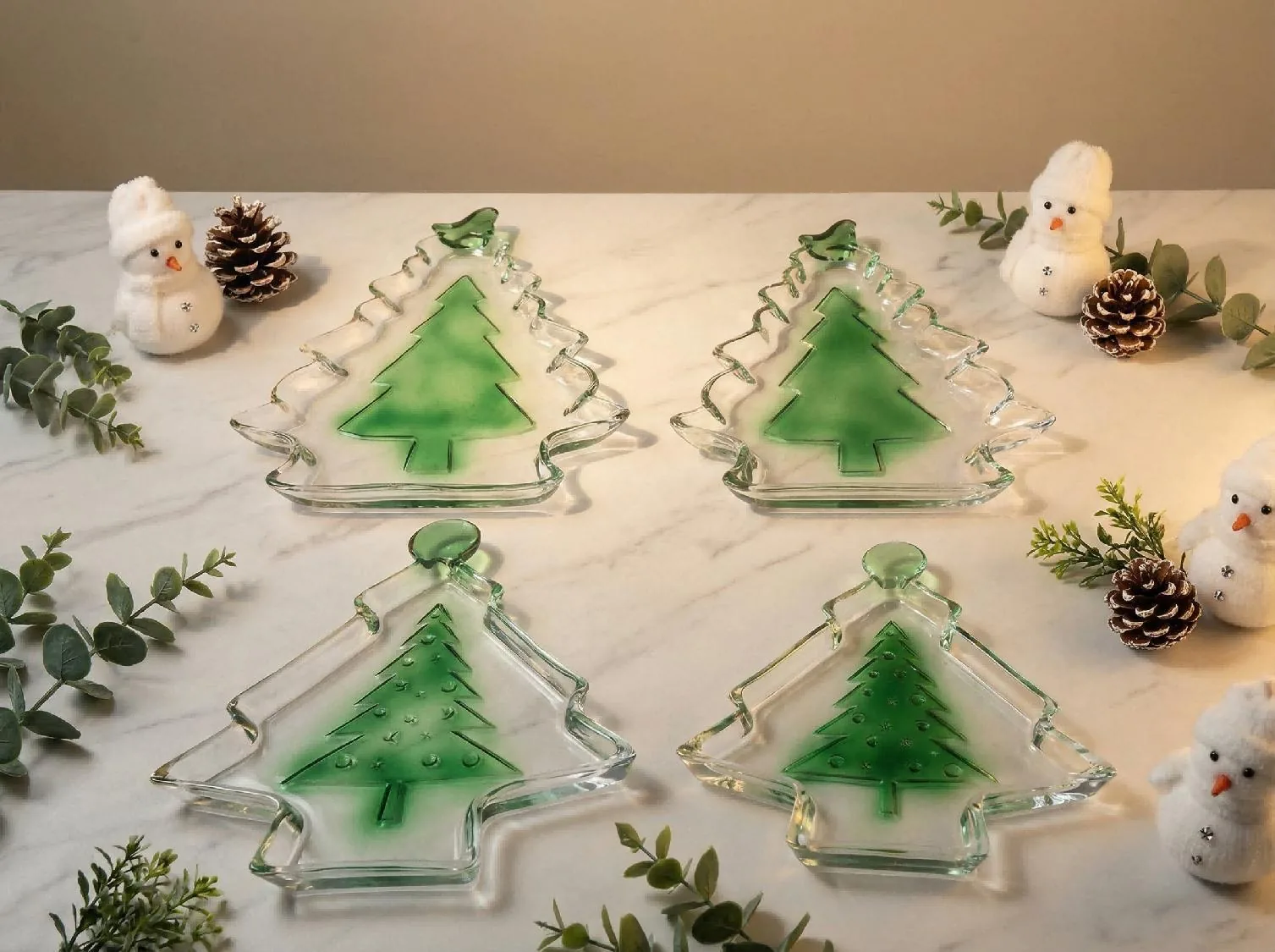
For this program, the manufacturing route must protect recognizable festive silhouettes with controlled color and giftability. Ask how the supplier would control that result and which decisions require a physical sample.
Compare proposals on the same decision framework
A quotation is meaningful only when the underlying scope is aligned. Confirm dimensions, capacity or candle fit, color reference, finish, decoration, packing unit, labeling, testing responsibility and the basis of the quantity.
Keep backward plan from retail launch; hero motif and supporting SKUs; decoration durability; gift-box and transit test visible in the comparison. A lower-looking proposal may simply omit a requirement that returns later as a tooling, quality or packing change.
- backward plan from retail launch
- hero motif and supporting SKUs
- decoration durability
- gift-box and transit test
Approve the reference that production will follow
The approval sample should be accompanied by written notes for critical dimensions, acceptable appearance, color and function. Review transparent or colored glass under consistent lighting and check the product in the context in which the buyer will see and use it.
If several SKUs form one assortment, approve them together. Consistency between objects often matters more commercially than small variation within a single item.
Close the loop from inspection to export packing
Agree when inspections occur, what constitutes a critical issue and how the retail unit will be protected in transit. Packaging should be evaluated with the product because internal movement, projecting details and set configuration change the risk.
Send Huaying a reference, target market, approximate quantity and required delivery window. The response can then connect a relevant product direction to the forming, sampling and export route rather than returning an undifferentiated catalogue.
Continue with the product and process.
Frequently asked.
Can Huaying develop custom Christmas glass decorations?+
Yes. Development can begin from a drawing, reference sample, mood image or an existing Huaying form, with the production route matched to the required geometry, quantity and finish.
What information should a buyer include in the first brief?+
Share the target market, intended use, approximate quantity, dimensions or capacity, color direction, packing expectation and required delivery window. Images or drawings make the first technical response more useful.
Can one program combine different glass-forming techniques?+
Yes. Huaying integrates pressed, blown and spun glass capabilities so a collection can use the process that best serves each object while remaining under one development and export workflow.