Process should follow the object. This guide helps buyers decide when precision pressing or expressive blowing better serves the brief.
Start with the commercial role of the object
A useful brief for pressed and blown glass objects begins with the customer, channel and intended price architecture—not with a catalogue number. Tell the factory whether the object must lead a collection, complete a coordinated family or deliver a seasonal impulse purchase. That context shapes the forming route, mould investment, color program and packing solution.
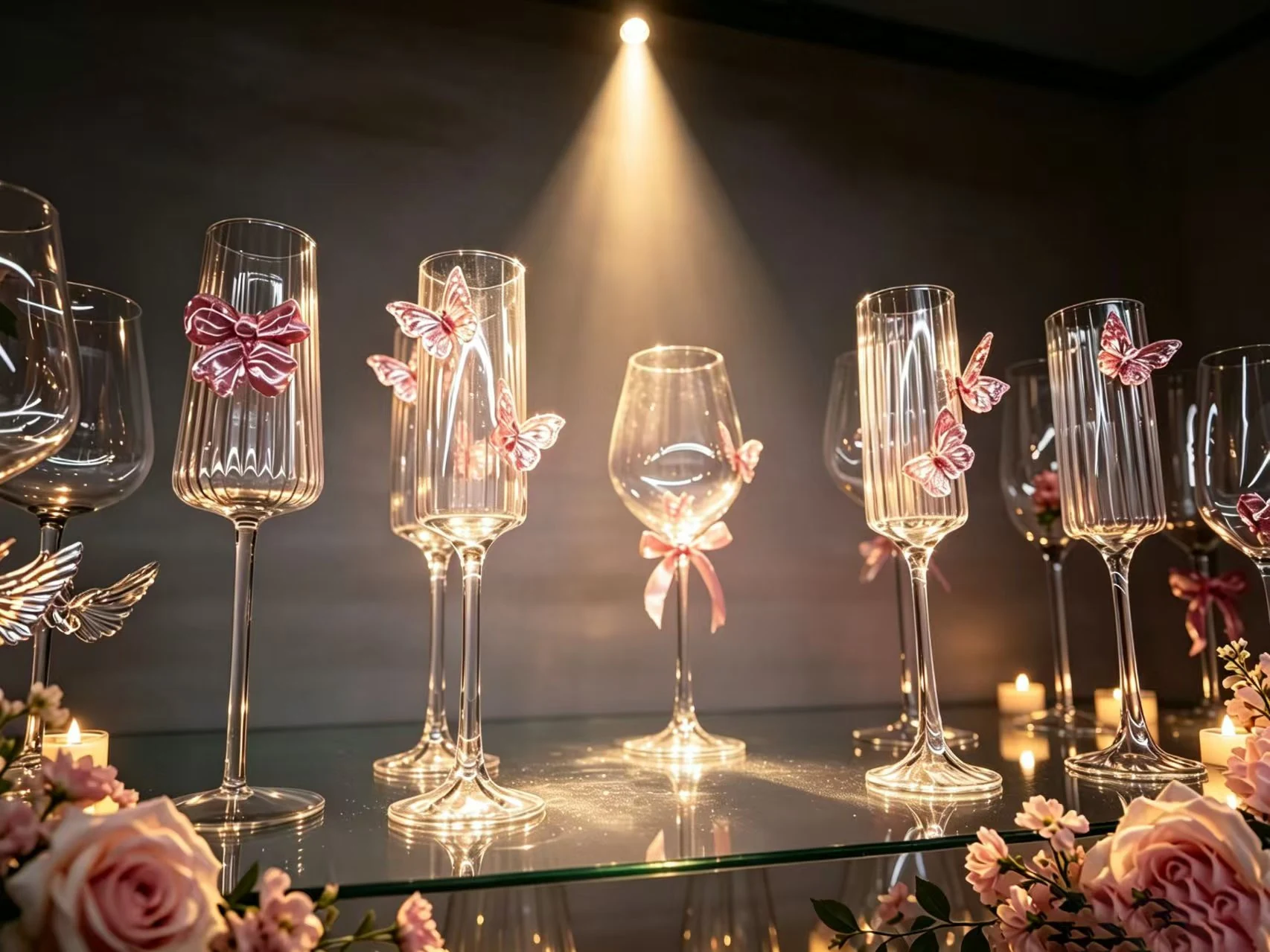
Huaying works from existing references as well as original concepts. The aim is to keep creative intent and manufacturability in the same conversation, so buyers can compare options before committing to tooling. Typical directions include sculptural décor, tabletop ranges, vessels and drinkware, mixed-technique collections.
Match the forming method to the design
For this category, the production method should protect a deliberate balance of precision, expression and repeatability. Pressing is particularly effective when repeatable relief, optical texture and dimensional consistency matter. Blown or spun routes can be integrated when the brief calls for lighter walls, fluid profiles or a different expression of handwork.
The practical choice depends on geometry, target quantity, finish and tolerance. A good development partner should explain those trade-offs early, then translate the chosen route into a sample that can be reviewed against an agreed standard rather than a vague visual impression.
Define the approval standard before sampling
Samples move faster when both sides know what approval means. Record the reference color, acceptable variation, critical dimensions, functional fit and the surfaces that matter most on shelf. For transparent and colored glass, review the object under consistent lighting and against the intended background.
Four decisions deserve an explicit line in the brief: geometry and undercut constraints; surface detail and optical intent; volume and repeatability; tooling investment and sampling route. These controls reduce late-stage changes and make the approved sample useful to production, inspection and packing teams.
- geometry and undercut constraints
- surface detail and optical intent
- volume and repeatability
- tooling investment and sampling route
Plan quality and packing as part of the product
Export quality is not a final inspection event. It is built through incoming material control, forming discipline, annealing, appearance checks, dimensional checks and packing validation. The inspection plan should focus on the risks that are specific to the design instead of relying on a generic checklist.
Packing must protect the most vulnerable edge, stem, lid or relief while remaining realistic for retail presentation and freight. Confirm inner protection, carton count, labeling and master-carton performance before production is released. This is especially important when several SKUs must arrive as one coordinated program.
What to send for a useful first response
Send a reference image, drawing or mood direction together with target market, approximate quantity, required delivery window and any testing or packaging requirements. If the design is still open, identify the non-negotiable result and the areas where alternatives are welcome.
Huaying's export team can then recommend a relevant reference, a mould-development route or a combination of pressed, blown and spun capabilities. The result is a response built around the object you need to launch—not a list of unrelated products.
Continue with the product and process.
Frequently asked.
Can Huaying develop custom pressed and blown glass objects?+
Yes. Development can begin from a drawing, reference sample, mood image or an existing Huaying form, with the production route matched to the required geometry, quantity and finish.
What information should a buyer include in the first brief?+
Share the target market, intended use, approximate quantity, dimensions or capacity, color direction, packing expectation and required delivery window. Images or drawings make the first technical response more useful.
Can one program combine different glass-forming techniques?+
Yes. Huaying integrates pressed, blown and spun glass capabilities so a collection can use the process that best serves each object while remaining under one development and export workflow.