Turn an initial direction into a coherent pressed glass candleholders range by aligning form, process, color, approval standards and SKU architecture.
Define the collection rule before drawing individual SKUs
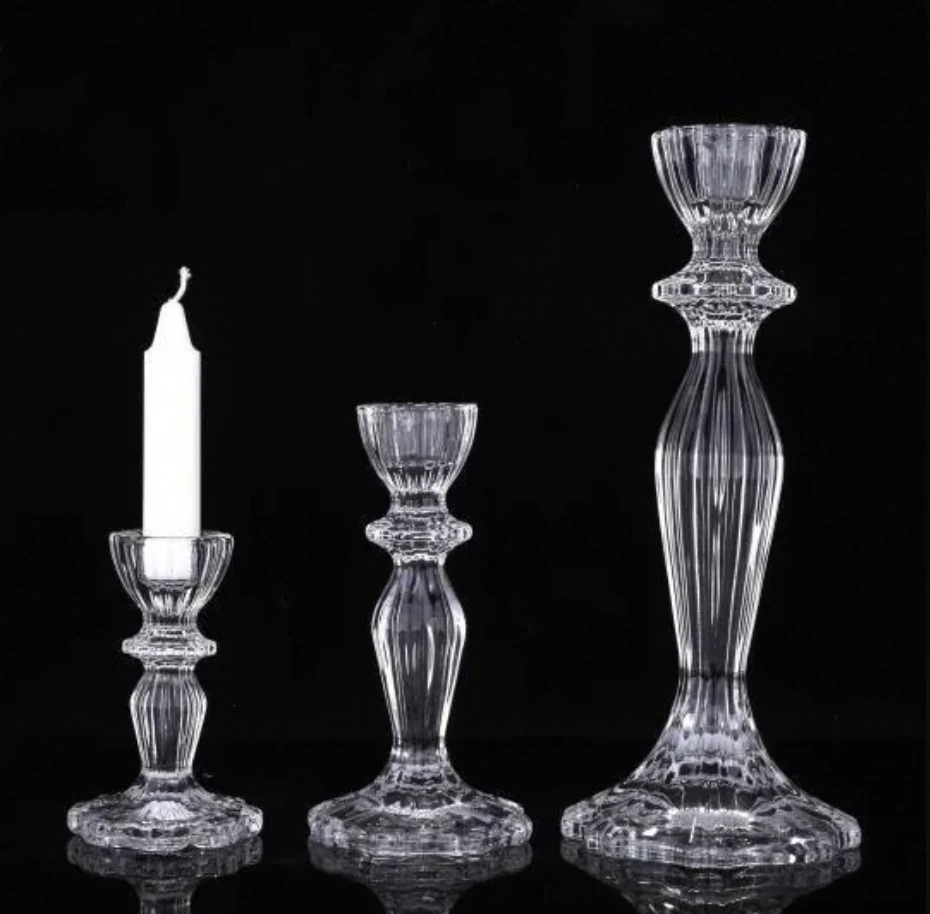
A coherent pressed glass candleholders range needs one recognizable design rule. It may be a relief language, a proportion, a rim treatment or a controlled color family. Decide what must repeat and what may change before developing individual objects; otherwise each sample can look successful on its own while the range fails as a group.
The intended uses—home fragrance, seasonal décor, private-label gifting, hospitality lighting—should determine the SKU architecture. Start with the hero object, add the entry point and supporting functions, then check whether every proposed SKU earns its place commercially.
- A candleholder is judged both unlit and illuminated; texture must work in both conditions.
- The base, rim and candle recess need separate dimensional checks.
- Deep relief creates stronger refraction but changes mould release and cleaning access.
Engineer the idea around the right forming route
The chosen process must preserve stable candle fit, repeatable relief and optical weight. Pressing supports repeatable relief, optical weight and dimensional control. Blowing supports fluid profiles and lighter walls, while spun methods can suit particular open forms. A mixed program is possible when the visual language remains consistent.
Review geometry for mould parting, release, mass distribution and annealing before surface decoration is finalized. Solving these relationships early protects the concept and avoids cosmetic revisions that do not address the real production constraint.
Build color and finish as a system
Color should be approved on the finished geometry because wall thickness, texture and background alter perception. A formula viewed as a loose sample may read differently at the rim, base and deepest relief of the actual object.
For a family, place several SKUs together under agreed lighting. This reveals whether apparent color, transparency and decoration remain coherent across different sizes and production routes.
Use samples as controlled decision gates
A sample round should answer named questions: silhouette, critical dimension, functional fit, color, finish and packing. Record decisions against one reference sample so later teams are not interpreting photographs or informal comments.
The four highest-risk decisions for this range are candle diameter and fit; wall and base stability; relief release from the mould; protective dividers and carton count. Assign each one an approval method and owner before the sample is released.
- candle diameter and fit
- wall and base stability
- relief release from the mould
- protective dividers and carton count
Translate the approved family into a launchable program
Production release should connect the approved sample to inspection criteria, carton configuration, labeling and shipment timing. Multi-SKU programs also need a plan for assortment ratios and replenishment so one item does not delay the whole launch.
Send Huaying the target market, channel, approximate quantity, desired launch window and the visual rule the collection must protect. The team can then propose relevant references, process choices and a realistic development sequence.
Continue with the product and process.
Frequently asked.
Can Huaying develop custom pressed glass candleholders?+
Yes. Development can begin from a drawing, reference sample, mood image or an existing Huaying form, with the production route matched to the required geometry, quantity and finish.
What information should a buyer include in the first brief?+
Share the target market, intended use, approximate quantity, dimensions or capacity, color direction, packing expectation and required delivery window. Images or drawings make the first technical response more useful.
Can one program combine different glass-forming techniques?+
Yes. Huaying integrates pressed, blown and spun glass capabilities so a collection can use the process that best serves each object while remaining under one development and export workflow.