
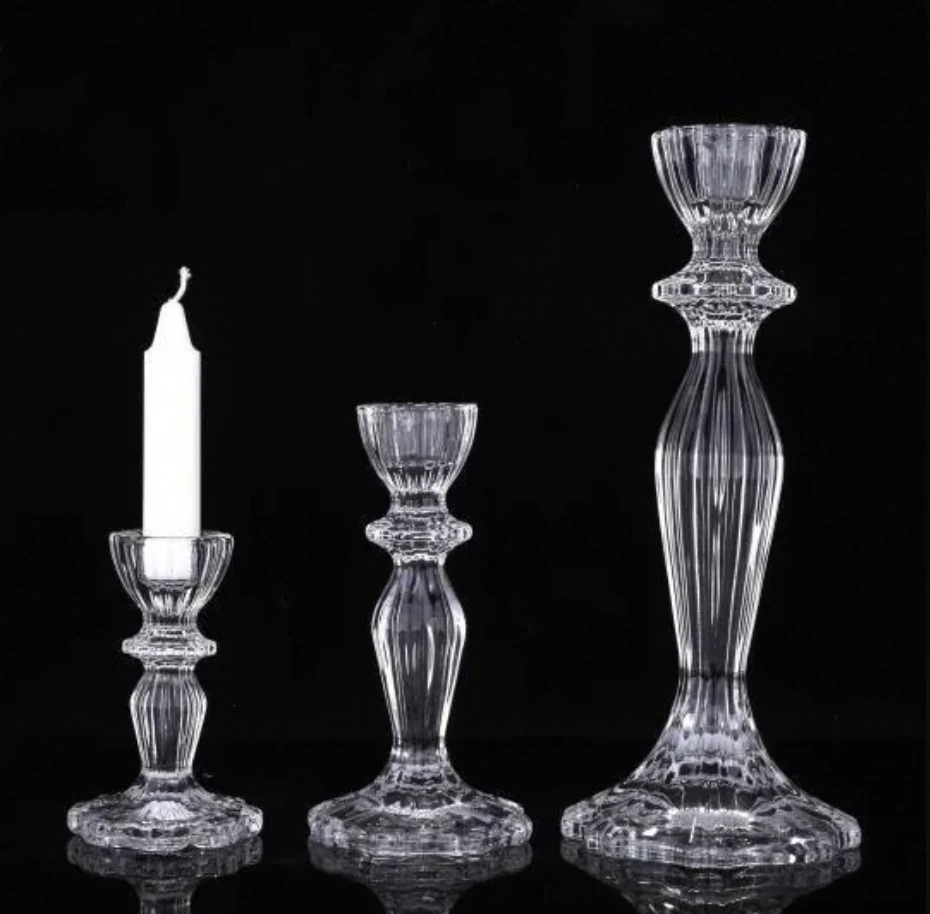
A risk-based inspection framework for pressed glass candleholders, from approved sample and forming controls to appearance, function and transit protection.
Convert the approved sample into measurable controls
Quality control for pressed glass candleholders begins before mass production. The approved sample should identify critical dimensions, functional interfaces, appearance zones, color tolerance and any surface that will be prominent on shelf. A photograph alone cannot carry this information reliably.
Use a risk-ranked specification: measurements that affect safety, fit or use receive tighter control than small cosmetic variation inherent to formed glass.
- A candleholder is judged both unlit and illuminated; texture must work in both conditions.
- The base, rim and candle recess need separate dimensional checks.
- Deep relief creates stronger refraction but changes mould release and cleaning access.
Control the forming risks that are specific to the object
The inspection plan should protect stable candle fit, repeatable relief and optical weight. Relevant forming risks may include incomplete detail, uneven seating, distortion, sharp edges, visible stress, unstable bases or dimensional drift at a mating part.
Rather than treating every mark as equal, define unacceptable, reviewable and normal characteristics with reference samples. This makes factory and buyer decisions faster and more consistent.
Separate appearance review from functional review
Appearance is judged under agreed light, distance and background. Function is checked through use: fit, stability, stacking, handling, capacity or candle clearance as relevant. Combining the two into one vague pass/fail decision creates unnecessary disputes.
For this category, pay particular attention to candle diameter and fit; wall and base stability; relief release from the mould; protective dividers and carton count. These checks should appear in both the pre-production review and the final inspection plan.
- candle diameter and fit
- wall and base stability
- relief release from the mould
- protective dividers and carton count
Treat annealing and handling as part of consistency
Glass can look complete before its internal stress and handling risks are understood. Stable temperature control, annealing discipline and protected movement between processes help preserve the geometry and appearance established during forming.
Decorating, washing, sorting and packing should not introduce scratches, chips or mixed shades after the forming stage has passed.
Validate packing against the real weak point
Packing should protect the actual vulnerability—rim, stem, lid, projecting motif, corner or heavy base—not simply add more material. Review inner separation, movement inside the retail box, master-carton strength and the consequences of one broken unit in a set.
A useful buyer brief includes the sales unit, carton count, destination and any retailer-specific test. Huaying can align the inspection and packing route with those requirements before production release.
Continue with the product and process.
Frequently asked.
Can Huaying develop custom pressed glass candleholders?+
Yes. Development can begin from a drawing, reference sample, mood image or an existing Huaying form, with the production route matched to the required geometry, quantity and finish.
What information should a buyer include in the first brief?+
Share the target market, intended use, approximate quantity, dimensions or capacity, color direction, packing expectation and required delivery window. Images or drawings make the first technical response more useful.
Can one program combine different glass-forming techniques?+
Yes. Huaying integrates pressed, blown and spun glass capabilities so a collection can use the process that best serves each object while remaining under one development and export workflow.